Tackling Myths around Suicide
Sunday 10 September 2023 marks World Suicide Prevention Day. Operations Manager and Senior Counsellor Clare Farman discusses some of the more common myths around suicide.
“According to the World Health Organisation, more than 700,000 people die every year as a result of suicide. Here at Young Gloucestershire we have seen a sharp increase in referrals to our mental health services and our waiting lists have grown.
“Suicide is one of the subjects that some young people are dealing with, whether that’s their own thoughts of suicide or the impact of losing someone to suicide. Suicide can be a difficult subject to discuss or even think about, but talking about suicide is not only important to raise awareness and reduce stigma, but it can also help prevent deaths. Many of our counsellors feel that any power in suicidal thoughts comes from keeping them to yourself. We want to help young people cope with their feelings, whatever they may be.
“There are a lot of myths about suicide that can lead to judgment. If a person feels judged or not understood, they are less likely to talk. We’ve all heard of the Samaritans. They are known for their 24-hour support service with their number often being seen in places where people have taken their lives in the past. Why? Because talking can defuse feelings, talking can lessen the intensity of a feeling and talking can offer a space for reflection, therefore talking can be a protective measure.
“Suicide and suicidal thoughts are very real and consistent topics that are brought up in sessions. At YG we want to be part of the conversation and help people to broach what can be a difficult subject. Our counsellors and youth workers will ask each young person if they have experienced suicidal thoughts when we assess what they need. We aim to make sure it is not a taboo subject from the start. If a young person talks about suicidal thoughts, they are addressed openly and without judgement.
“Exploring some of the myths around suicide may help to create further understanding. If we have an understanding of what it may be like for a person experiencing suicidal thoughts, we are more likely to help, more likely to notice and less likely to judge.
Talking about suicide may make death by suicide more likely.
As we have already started to think about, whilst talking about a person’s suicidal thoughts can be difficult, it can be a preventative measure. Giving feelings a voice can help to defuse intense feelings, it can help a person feel heard and supported.
Suicide is a selfish act.
Suicide can actually feel like the only way to stop the pain that person is experiencing and with many feeling a burden to others, they can feel like their death will be the best outcome for all. Suicide happens when a person feels there is no other option.
Only people that are depressed have suicidal thoughts.
A person that has never had any mental health difficulties may experience suicidal thoughts. They may have experienced a traumatic event, experiencing relationship, or financial difficulties. They may have suffered a bereavement or are struggling with loneliness. A person that is having suicidal feelings is often struggling to find a sense of purpose or hope in life.
If a person has made their mind up to end their life, nothing will change this.
A person experiencing suicidal thoughts may not want to die, they want the way they are feeling to stop. In fact, often, actively feeling suicidal is only temporary. Therefore, support at the right time is important as suicide is a permanent solution to a temporary feeling.
People that talk about suicide aren’t serious, they are attention seeking.
If they are talking about it, they are reaching out for help and support. If they are talking about it, it’s a consideration for them which should be taken seriously.”
If you are concerned about a young person’s mental health.
Our counsellors and youth workers are highly trained and skilled. We encourage honesty and are not afraid to talk about that there may be a part of a person that does not want to live anymore. These thoughts are common and the young person will be met with kindness and support if they feel they can talk about this. We always take action if we need to after a session and have robust and effective safeguarding procedures if a young person is talking about a putting a plan in place to end their life.
Through YG’s projects young people can have weekly sessions with a counsellor and also with a mental health youth worker from six weeks to six months. Our counsellors focus on the emotional work and the youth worker supports more practical elements of their life. To make a referral clink the ‘Access Services’ button in the main menu.
YG do not offer crisis support and if a young person needs urgent assistance they should contact 999.
They can also call The Crisis Team on 0800 169 0398
Or Samaritans on 116123
Reflecting on Recent Weeks in YG.
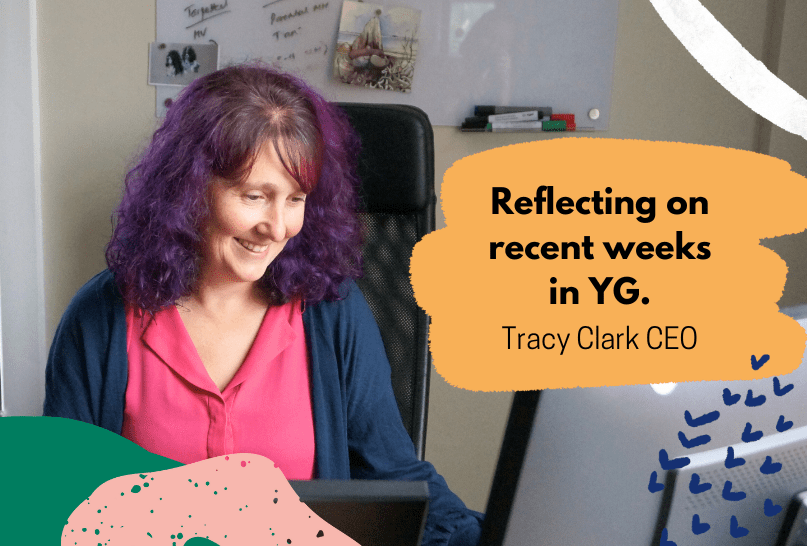
“Several things stand out amid a hectic but rewarding time for Young Gloucestershire. The key element of Young Gloucestershire is a community that is committed, supportive and cares about our county’s young people. Our staff’s primary motivation is to help, support, and make a real difference in young people’s lives.
“Reflecting on the recent months, I feel proud of our team and the hard work that goes into supporting the county’s young people. In recent months we have welcomed another 25 new starters to the world of YG, increasing our delivery capacity, diversity and skill, which allows us to support more young people than ever.
“However, waiting lists have become a real challenge, with an increasing number of young people seeking our services. Being able to expand our support, particularly in mentoring younger age groups, has been something I am immensely proud of. However, more is needed, and we must find the funding to widen our mentoring services across the county.
“Increasing our mental health offering to include additional group work and doubling our animal intervention programme enables us to reach and support more young people than ever.
“No matter how much progress we are making, last week’s school stabbing incident in Tewkesbury presented challenges for young people that no one could have anticipated or expected. Being able to be in the school and do our bit in supporting young people through the first couple of days and assisting the amazing staff at Tewkesbury School was a privilege.
“As we’re now in the depths of summer, I’m starting to think about what will come. As with all charities, there are many challenges and opportunities ahead:
- Getting the funding for a new boiler fitted in our Dock HQ before the cold kicks in is no small feat.
- Finding more funding to support the community of Tewkesbury and then wider communities across the county with mentoring and mental health services continues to be challenging.
- Developing a new strategy for YG and IB seeking to respond to emerging and growing needs in our county helps us set our course for the future.
- Seeking ways to positively develop YG’s culture, diversity and skills as we seek to continue to grow will only help us continue to respond to the needs of young people in our county.
“But first, some much-needed rest; a massive thank you to all who have supported YG in the last six months. Whether you are a fundraiser, trustee, staff member or observer, we appreciate all your support and help.”

How did Gloucester Prison Get a Spooky Reputation?
HM Prison Gloucester, a former category B men’s prison in Gloucestershire, holds a rich history dating back to its beginning in 1792. The prison was built on the grounds of Gloucester Castle, which serves as a reminder of its historical and gruesome past.
Throughout the centuries, Gloucester Prison witnessed public executions within its gatehouse. These grisly events, which took place right at the prison’s entrance, captivated audiences and served as a warning for potential wrongdoers. This shadow of death loomed over the site until the 20th century.
Following its closure in 2013, due to overcrowding, a local historian stated that the remains of over 122 individuals may still lie buried within the prison’s grounds, with it’s dark past the prison has earnt its reputation as one of the most haunted in the UK.
This September, Young Gloucestershire will be challenging people to spend a night within the buildings haunted walls. Sleeping in the derelict cells or on the abandoned balconies. The night promises to be one you’ll never forget, with music, food, drinks and entertainment we will be sure to stir the spirts.
Those that wish to take on this spooky challenge need to raise £100 which will go toward supporting the most vulnerable young people in Gloucestershire.
Why not gather a group of friends and join us for the ultimate night in…Are you brave enough to stay in Britain’s most haunted prison?
Understanding Youth Work, Mentoring & Counselling.
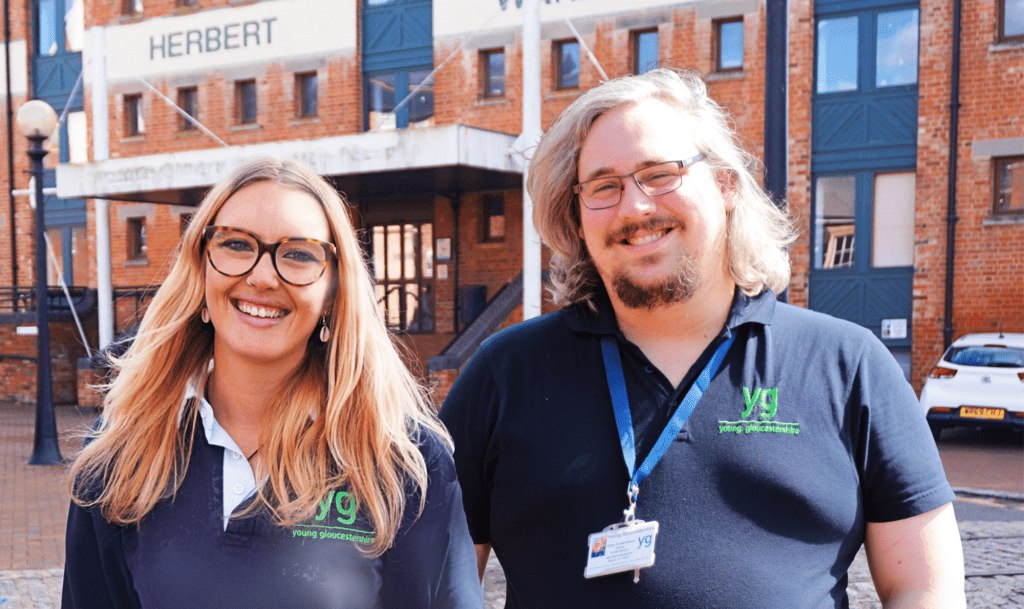
We often get asked what the difference is between some of our services and staff, including Youth Work, Mental Health Youth Work, Mentoring and Counselling. In this blog some of our staff have taken time out to reflect on the uniqueness of their role and the type of support they offer to young people.
Toby Cadenhead – Senior Youth Worker
Youth work can be really hard to define. Most people would agree that youth work is helping young people, but this is true of many other professions as well. So, what is different about youth work? Many people go to the image of playing pool, drinking tea and chatting with young people about issues affecting them. Of course, this absolutely is youth work, and very important, but there is a much deeper process going on here that can happen in many other settings too.
Youth work has a rich history growing out of the Boy’s and Girl’s Brigades at the turn of the 20th century and largely provided by faith groups. By the 1960s youth work had grown into a mainstream with youth clubs across the country hosting radio DJs and having state of the art facilities. In more recent years there has been a decline in Government funding for these public services meaning the nature and space of youth work has changed dramatically. Youth clubs are much thinner on the ground and much of youth work these days takes place in other settings and is often picked up by the voluntary sector.
Over the years lots of people have attempted to understand the unique nature of youth work: In 2005 Bernard Davies wrote an article called “A Manifesto for Youth Work” and attempted to define the characteristics of successful youth work (revised in 2015 and then 2021) and in 2020 the National Youth Agency published a “National Youth Work Curriculum”. I’ll attempt to add my thoughts to these, but would encourage everyone to check those out!
Youth work is type of informal education, where we use a variety of strategies to support young people in their personal, social and educational development. A primary aim of youth work is the desire to empower young people to make their own decisions and considering what they want. Whatever we are supporting that young person with, we must always ensure we are amplifying their voice and giving them choices and working within this framework. It is also imperative that the young person’s engagement is voluntary – we will always do our best to engage young people and support them, but ultimately, we can’t and shouldn’t force them to work with us. Youth work requires a non-judgemental approach so that we can help any and all young people get the support they need from where they are starting.
Over recent years at YG we have also introduced Youth Worker roles with a focus on Mental Health. The supportive nature of these roles is incredibly similar but the nature of the services that they deliver means they take a closer interest in young people’s mental health and wellbeing. Often working one to one a Mental Health Youth Worker is able to look at the specific lifestyle changes that will aid a young person’s wellbeing. they will be able to introduce tools, habits and hobbies that encourage good mental health.
Honor Binning – Delivery Manager – Mentoring
“Mentoring services provide a long-term ‘safe space’ for anyone who requires a sustained, trusted relationship with an adult. It is a one-to-one, non-judgemental relationship in which an individual mentor voluntarily gives time to support and encourage another. This relationship is typically developed at a time of transition in the mentee’s life and lasts for a significant and sustained period.” (Active Community Unit, Definition of Mentoring).
Mentoring can be delivered with both young people and adults. Mentoring is a one-to-one relationship in which people can be paired together in order to learn from one another. Mentoring relationships often have a specific goal in mind, whether that’s career mentoring or a specific aim and goal of the individual involved. By its nature mentoring generally matches one more experienced individual with another who is keen to learn or develop by following their guidance. The relationship provides a positive role model who can give practical advice and guidance using their own lived experience to help guide their mentee. The mentor can be a volunteer or a paid professional.
Mentoring and youth work have many similarities and some would consider mentoring to be a subsidiary of youth work. Like youth work, the relationship in mentoring is informal and the mentee should feel empowered to steer the conversation and set personal goals. However, unlike traditional youth work, mentoring is always one-to-one, often has a clearer aim in terms of outcomes or planned journey that is set by the mentee and the style of work can be used for adults as well as young people.
Rachel Crawley – Counsellor
To me, counselling is walking along a dark path side by side with someone, whilst holding a light up so that they can see which direction they want to take. That light could symbolise the training counsellors receive and can include things like listening skills, non-verbal communication and specific techniques. The British Association for Counselling and Psychotherapy (BACP) explains that counsellors won’t give their opinions, give advice or prescribe medication but will help you find your own solutions to the issues you’re experiencing.
Counselling can be done with anyone, children, young people and adults. Young Gloucestershire provides counselling for those between 14 and 25 years of age and between 16 and 25 across the other project. It would be unreasonable to expect a 16 year old to have the same levels of understanding and life experience as a 40 year old. When working with young people there is therefore an adaptation on the counsellor’s part to work within the client’s frame of reference. The most noticeable difference when working with young people as opposed to adults is that you are dealing with issues in real time, in most cases (e.g. issues at school, with parents, discovering sexuality and identity…) Adults can often be bringing issues that happened several years ago, if not decades, which means there can be a level of ‘distance’ between them and the issue being brought.
Counselling works best when attending on a weekly or bi-weekly basis, is consistent and when a client is ready to engage with what comes up in sessions. The counsellor-client relationship is like no other – it is boundaried, neither party will know the other outside of the sessions and the counsellor will not disclose much about themselves so that the focus remains on the client. The support given is on an emotional level. If we were to compare counselling to youth work or mentoring, one of the main differences would be that there is less need for such firm boundaries, the youth worker can give away more about themselves and the support is usually more practical (i.e. help with budgeting or cooking skills).
Working well together.
Whilst counselling, youth work and mentoring offer different types of support, there are many similarities as well. Both counsellors and youth workers should aim to provide a safe and non-judgmental space. Both should strive to empower the young person to make decisions for their own lives and display an open attitude to whatever it is that the young person may talk about that day. Both workers also have a duty of care to keep the young person safe, and where necessary may have to complete safeguarding and work with external agencies. Whilst information sharing can at times occur in the best interest of the young person, all workers will have a commitment to confidentiality. This is particularly true of counselling, where there are very few times a counsellor will ever break confidentiality.
It is however, when these areas of support work together, that we can provide something really holistic with hopefully most “bases being covered”. It can equip a young person with the emotional insight needed to process and deal with issues in their life, aiding personal growth and providing techniques to deal with things better in the future, as well as practical life skills that will help as they grow and mature, helping them to face whatever life may throw their way.
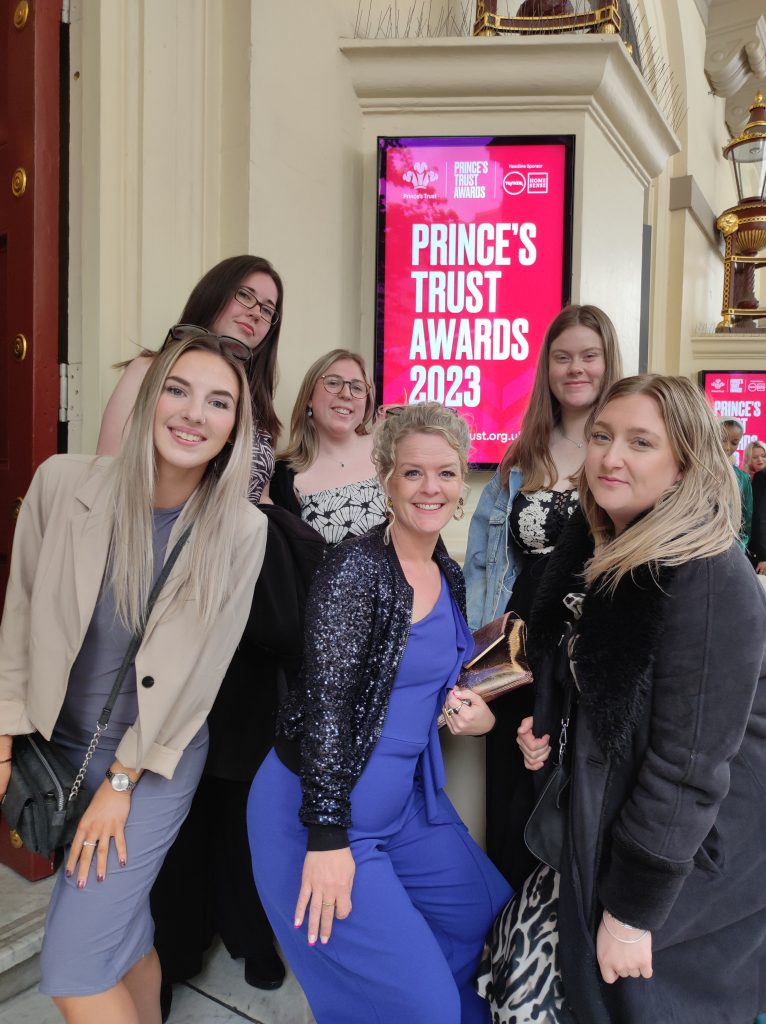
The Prince’s Trust Awards 2023
“Young Gloucestershire have worked in partnership with The Prince’s Trust for over 33 years delivering their Team Programme. The programme shares our aim of supporting and empowering young people through twelve weeks of teamwork and confidence building.
“Each year the Trust celebrates individual achievements from the programme in a grand ceremony and what an honour it was for us to attend this year and hear some of the remarkable stories from young people.
“From walking on the red carpet to watching sofa interviews with Ant and Dec, Young Gloucestershire had the grand opportunity to watch as award winners, Funmi, Corey, and Motaz, to name a few, celebrated their achievements. The winners had the chance to walk the red carpet and be interviewed by the hosts of the show; Ant and Dec. Others were presented with their awards by well-known stars including Amal, George Clooney and Sam Ryder. Additionally, we learned that King Charles hosted the winners at Buckingham Palace on 17 May, which adds even more excitement to this prestigious occasion.
“Although Young Gloucestershire was not nominated for any awards this year, we were delighted to witness the recognition given to some incredible young individuals. The evening provided us with a chance to reflect on the impact we make as an organisation and it reinforced our commitment to empowering and supporting the young people in Gloucestershire.
“As someone who has completed the Prince’s Trust program through Young Gloucestershire, attending the Prince’s Trust Awards held a special significance for me. Witnessing the tremendous support and impact the trust has on individuals’ lives was both amazing and heartwarming. What touched me the most was seeing all the young people and hearing how far they have come and how the princes trust has helped make their lives better.
“For me, the atmosphere at the awards ceremony was filled with a sense of celebration, inspiration and hope. Having experienced the program firsthand, I understand the great change it can bring to people’s lives. Before joining Young Gloucestershire and the Prince’s Trust program, I was unemployed and struggling with anxiety and depression. I felt hopeless and on the verge of giving up.
“Through the program, I rediscovered myself and regained the confidence I had lost. It lifted me out of the rut I was in and made me believe in my potential. Now I am doing a Marketing and Communications apprenticeship at YG and being part of this organisation and the Prince’s Trust program has been one of the best decisions I have ever made. I am committed to continuing my personal growth and making a positive impact on the lives of others.”

YG takes Pride in their Workplace.
As we celebrate Pride this month YG wanted to share some of our recent work and thoughts around Equity, Diversity and Inclusion (E,D&I). As an organisation we are not yet reaching all of the young people that could benefit from our services and we have been questioning why this is and how we can improve to ensure we are extending our reach into diverse communities. We recognise that Gloucestershire has a diverse population and we at Young Gloucestershire want to ensure that our workforce is a truly inclusive organisation that reflects our young people, families and communities.
To us, inclusion means creating a workplace that values diversity and where everyone feels welcome, accepted and safe as themselves; with access to equal opportunities regardless of background.
Our approach to equality, diversity and inclusion is deeply rooted in our values as an organisation with listening, learning and empowerment at its heart. We know we need to develop a workforce where young people can see themselves reflected and therefore to achieve this, we need to look at how EDI is embedded throughout all areas of the organisation. We know we have key areas we need to change but we also know that we cannot do this alone and that we need to work with community partners to ensure our impact is maximised.
We have brought together a dynamic and passionate group of staff, from across all levels of the organisation, who meet monthly to develop a three year Equity, Diversity and Inclusion (E,D & I) action plan. They will continue to drive this focus by monitoring, reviewing and evaluating the progress of the plan by setting goals that hold the organisation to account.
What are our Key Priorities?
After initial exploratory work with our staff and implementation of a staff E,D and I survey, we have been looking closely at the issues of equity, diversity and inclusion. Through open and honest conversations and reflections of our current culture we recognise that we need to be more pro-active in how we approach issues and that taking stronger action on E, D & I is vital to ensure we are a healthy organisation that is leading the way in Gloucestershire. By taking positive action now, we see opportunities for us to make positive impact both internally and externally in the communities we work in.
We have developed an EDI work plan to guide us over the next three years with key actions and responsibilities to ensure we are moving in the right direction on our EDI journey. There is no end point to this journey and we will continue to adapt and review and revise this work as we go. We will be creating a team of EDI champions made up of passionate and committed staff from across all areas of the organisation that will be trained and supported to help drive the work plan forward, hold people to account and move us all to fulfil our priorities.
This is our initial action plan focusing on four key priorities identified through the exploratory work completed. We consider this our starting point on a journey that will take time to work through. We are committed to action and so setting initial goals is key to avoid paralysis on this essential issue.
Priority 1 | Environment and Culture
We want to ensure that our staff have a strong sense of belonging within the workplace by creating safe spaces and psychological safety through all levels of the organisation. We want to make sure all of our physical spaces are welcoming, inclusive and accessible for all.
Priority 2 | Recruitment
It is vital that the young people in our communities see themselves reflected in our workforce.
We want to encourage applications from those from different backgrounds and circumstances with the aim that we become and remain representative of the people of Gloucestershire and in particular the economically and socially deprived areas.
Priority 3 | Communications
We are committed to making our communications more inclusive and accessible to all. This means we will be exploring ways to ensure that our messages are easily understood and resonate with people from diverse backgrounds. We want to ensure that everyone feels welcome and included in our communications and we will be working to identify and remove any barriers that may exist.
Priority 4 | Service Delivery
As a county wide organisation, we know that there are locations and cohorts of young people that we are not reaching and that this needs to change. As an organisation we want to reach all young people that need us and hope by focusing on the areas identified within this work plan we will be better placed to do this effectively and successfully
Words and language are a vital part of thinking about and supporting equality, diversity and inclusion. But words are not enough. An organisational statement alone will not change how we approach this issue. We need to act, to turn our good intentions into meaningful action that will contribute to making our services, organisation and our community fairer and more equitable.
Always Learning and Evolving.
We cannot do everything all at once and trying to devise the perfect diversity action plan risks paralysing us from doing anything. As such we have identified actions we believe will improve our approach to equity, diversity and inclusion. Some of these we will get on now. Other actions will then follow once we have done the immediate things. More activity will come later – some of which we can already anticipate, some will emerge as we progress through this plan and continually reflect as we do.
Supporting Other Organisations.
At YG we feel very passionate about this piece of work, we are happy to learn from other organisations and also happy to share our experiences if you are part of an organisation who is looking to reflect on your own equity, diversity and inclusion.
Charities Announce Appointment of New COO.
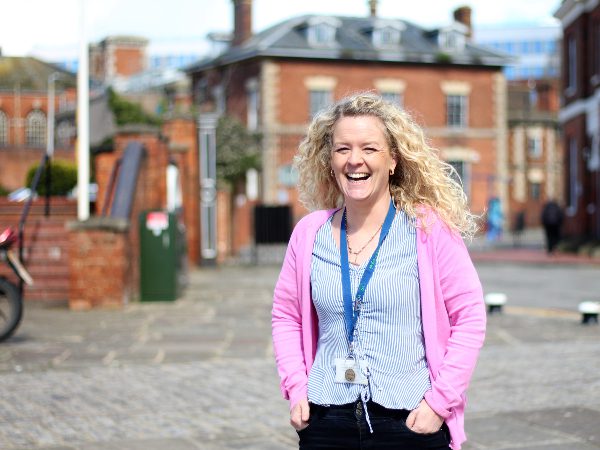
Young Gloucestershire and Infobuzz are pleased to announce the appointment of Alicia Wynn to the role of Chief Operations Officer.
This new role reflects the continued growth of the charities and their ambitions for the future. Although this is a new role we are pleased to appoint Alicia who has been working with YG for over ten years, joining the charity initially as a sessional Youth Worker working one night a week in a youth club. Alicia talks to us about her aims for the role and how her experience of working with YG will aid her strategic direction.
“I joined YG back when I was studying for a Degree in Youth work. I had been working in a children’s home before and a friend of mine was a youth worker. I thought, yes, that looks like something I would be interested in. I wanted a career that I loved. Something I could build and develop and ultimately be a role model and inspiration for my children and those around me. I started out working with YG’s young parents’ group and it all grew from there. I didn’t join the charity with an idea I would work my way up to management, but actually it is my on the ground experience that I like to think has really helped develop my management style.
“I learnt so much from working with the young parents group. They were a wonderful and vibrant group, full of energy, but also complex, with many challenges and often safeguarding concerns. I learnt a lot during this time, both about myself and the types of challenges young people were facing. I learnt about ‘the system’ and how I could support young people that were a part of it. It made me realise how important it is for young people to have a positive relationship with a professional that focuses on what they can do rather than what they can’t.
“It also made me seek out additional training and development as I wanted to be sure I could offer the best advice and support. It was this project that really opened my eyes to safeguarding. Safeguarding became a large part of my studies and informed my research projects. This drove my ambition to become Lead of Safeguarding for YG.
“I continued to work in delivery at YG’s drop-in centre called ‘The Link’ I spent six years there and I loved everything about it. I loved the chaos and the unknown that came through the door. A different challenge every day. I loved the diversity of the issues and working it out together with young people.
“I believe it was these experiences early on in my career that helped me to later take the leap to a Senior Management role and Designated Safeguarding Lead. It’s that on the ground experience that I keep with me every time I make strategic decisions about the charity’s delivery. Through out my years with Young Gloucestershire I have also built connections in the sector and grown my understanding of the collaborative work that goes on to support young people in our county.
“This latest move to COO is a big step, but one I am excited to take. Both for myself and for the charities – this is a joint role for Young Gloucestershire and Infobuzz, a new role for both charities that is needed as a direct result of the growth and development that we have made over the recent years. Covid proved a challenging time for everyone and for us to have survived and managed to adapt and respond to the needs of our service users throughout this period, was something I was incredibly proud to be a part of.
“In order to thrive through this next phase, we must continue to adapt, diversify and innovate so we may expand and develop our services to meet the growing demand that we are finding amongst both young people and families. I look forward to helping YG and Infobuzz continue to take these next steps and while I do this I will still have the voice of young people, parents and families in my mind.”
YG Working to Reduce School Absences.
BBC News recently reported that school absences remain above pre-Covid levels with “a quarter (25.1%) of pupils persistently absent last term, compared with 13.1% in the autumn term of 2019…The Association of School and College Leaders attributes many absences to high levels of pupil stress and anxiety, long waits for mental health treatment and “disengagement” with education as a result of the pandemic.”
Our Transition Chat programme works to address these types of issues by offering mentoring to Year 11 students whose plans have been impacted by the pandemic. Providing them with practical advice and support as they explore their options. Laura Drackett, Youth Worker on the Transition Chat programme talks to us about her on experiences of working with those young people who have disengaged from education and what YG is doing to help them take their next steps.
“The majority of young people I support have attendance issues related to their mental health following the pandemic. Young people faced huge isolation when schools were shut and many of them did not manage to complete the work that was set by their school providers. This may have been down to lack of support, lack of equipment/access needs, illness, family stress and crisis. By not managing to engage in the distance learning provision provided it has made their return to school even harder as they have fallen so far behind their peers, impacting not only their grades but also their self-esteem, confidence and social skills.
“When I’m working with a young person, rebuilding their confidence is at the heart of everything we do. It’s not all about academic skills and completing school work, we agree on small tasks, it might be something as simple as taking the dog for a walk or going to the supermarket with a parent or carer. Sometimes I take them to a coffee shop and encourage them to order their own drink so they can begin to rebuild their social skills. These tasks may seem simple to you or I but these can feel like huge steps to a young person who has totally disengaged. Sometimes it can take a few sessions before they are confident to complete these basic tasks before we can even start talking about their education options.
“Having a good working relationship with both the school or training provider, the parent and the young person is key to the success of us moving forward. My role is to help advocate for the young person and to help restore their faith in themselves and their abilities. Last year I worked with one young person in particular who lacked self-esteem, she had experienced bullying at school and following the pandemic no longer felt able to leave the family home. We worked together, overtime, building her confidence and exploring her skills and passions. Eventually she secured an interview for a placement with an engineering company. I helped her prepare and attended the interview with her, waiting outside, the look on her face when she came out of the interview and received the news that she had been successful was priceless.
“After a young person manages to reengage in education, we don’t just leave them there – we are able to continue to support them whilst they settle in. This is really important to ensure continuity of support for the young person and retention. Once I do close a case it is a satisfying feeling to know that you have helped a young person change their future and we often get messages of thanks from families thanking us for our time, patience and understanding. I think that really is the key to a successful relationship. To be able to listen without judgement, to be able to encourage while working at the pace of the young person and to be able to give time to address the underlying needs of the young person.”
Youth Unemployment. A New Approach
Katie Vickers, Education and Development Delivery Manager talks to us about YG’s latest service to support young job seekers.
“Are you aged between 15-25 and unemployed? You’re not alone. At the beginning of this Autumn there were over 8,000 unemployed people in Gloucestershire, including close to 2,000 young people aged between 18-25. That’s 25% of unemployed people in Gloucestershire under the age of 25. In the UK as a whole, 9% of 16-24 year olds are currently unemployed. The highest amount in any age group. But at the moment we also have the highest ever amount of job vacancies recorded in the United Kingdom, so then why are so many young people unemployed?
“According to a recent survey conducted by the Prince’s Trust 40% of young people are feeling less ‘in control’ of their lives than ever. Covid has had a huge part to play in this. We’re seeing elevated numbers of young people with poor mental health compared with the beginning of the Covid-19 pandemic. When we take into account the lack of social interaction as well as disrupted education that was a product of national lockdowns, of course this is going to impact young people’s confidence and personal growth.
“Let’s not forget that on top of that we’ve just entered a recession, with predictions from the Bank of England that unemployment will nearly double by 2025. The lack of control felt by young people is totally understandable. According to the same survey conducted by The Prince’s Trust, 58% of young people believe the cost of living crisis will prevent them from reaching their potential.
“But it’s not all doom and gloom! 52% of young people also feel like living through the pandemic has made them MORE determined to achieve their goals! Here at Young Gloucestershire, I’ve definitely seen a huge amount of resilient young people who have come to The YG Hub in Gloucester asking for support to bag their dream job, get back into education and boost their CV in order to get to where they want to be.
“Since 2021, the government have increased provisions for young people, such as: offering apprenticeships, the kickstart programme and traineeships.
“So, what is Young Gloucestershire doing? We’ve been listening to what employers have to say about the applications they receive from young people in Gloucestershire and we’ve introduced the YG Hub Gloucester. The Hub is a one-stop-shop for young people to get their career moving. Whether they don’t know what they want to do, they are stuck in a rut or they feel like their dream job is out of their reach. The YG Hub Gloucester will help young people focus on building a career. The Hub offers a whole host of services from support to improve your CV to application and interview guidance from leading employers. On top of that we can offer work experience opportunities that have been designed in partnership with local employers to fulfil the needs of the business as well as supporting the young person.
“We’ve also been listening to the needs of young people too, and we’ve heard that they don’t want any job but that their aspirations are far reaching with lots of our young people feeling passionate about doing something good that means something to them on a personal level. So, we’ve introduced 1 to 1 sessions with a dedicated youth worker in the YG Hub Gloucester who can help you search for that perfect job or your next steps into education, provide free training and help you think about ways to enhance your CV.
“What can you do if you’re a young person? If you are staring at a screen full of jobs but feeling uninspired, come and visit the YG Hub Gloucester where you can get guidance from one of our staff. Feel like you want to explore your options? Not sure if you want to go back to education? That’s ok, we’re here to help.”
For more information about the Hub and current opportunities click here
YG Hub Gloucester
Graphic House, Greyfriars, Gloucester GL1 1TS
Open Tuesday to Thursday 11am-3pm
Pop in and make your first appointment or use the contact us form below to get in touch.
If you are an employer reading this:
YG work with lots of brilliant young people with unique skills and experiences. Many of them have overcome personal challenges that have given them an impressive level of resilience and an insight that many their age do not share. However not all young people are the same and some really struggle with job searching, interviews or perhaps lack career aspirations.
If you have a vacancy and would like to meet some interesting and exciting young people that have real potential then YG would love to work with you. We would like to help employers explore a new approach to recruitment that enables you to see young people in their best light and helps young people to really understand the reality of the workplace. We have found this approach to be a great success, resulting in high levels of retention for employers and a positive experience for all involved.
If you would like to know more then please get in touch and ask to speak to the YG Hub Gloucester.
Main Office
YG Hub Gloucester
YG Hub Cheltenham
We also regularly work out of community buildings across the whole county. Contact us to find out where we are working near you.
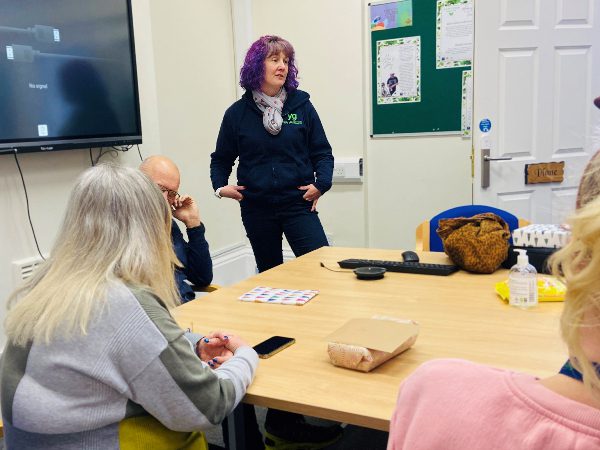
The Importance of Understanding Charity Finances
“Over the last month I have been running sessions for the staff team at YG titled ‘Understanding YG’s finances’. I had wrongly not shared the ins and outs of YG’s income and expenditure with the wider staff team before. I had assumed the team didn’t worry about where the money comes from and how an organisation like ours works as long as they are able to do their jobs. This week I learnt that not understanding how our funding cycles work and where and how the money comes from, can leave some of our team to be disenfranchised. It has made some question how management make their decisions and has led some staff to feel resentful about money being invested in certain areas and not others.
“Having been the CEO of YG for 12 years, I sometimes forget the knowledge I hold isn’t shared by others. We have grown considerably in recent years and this means I don’t spend as much time with the teams on the ground, delivering training or sharing my knowledge and experience. My role has become much bigger and I have many more challenges to contend with. I also don’t want the team to feel the ongoing pressure of generating income as their focus needs to be on meeting the needs of young people.
“However taking time out to share knowledge with the whole team is essential particularly as so much of our workforce is in the early stages of their career. Through this process I have learnt there are some essential things that our teams need to understand:
- The difference between restricted, income which makes up 90% of our income and free income. Helping staff understand that we often don’t have choices about where we spend the funding we get, the funding available to us normally comes with clear restrictions of what we can apply for and deliver.
- Understanding the difference between fixed costs and variable costs helps the team understand where we can make choices and where we can’t.
- How YG has been impacted by the cost of living increase, in just the same way as the team are being impacted helps show the additional income we need and don’t have.
- Understanding there is an expertise to balancing income, expenditure, unexpected costs and making the right financial decisions at the right time has helped staff value the our board of trustees and their knowledge in these uncertain times.
- Why a charity holds reserves and the balancing act that goes into deciding whether to spend it. Staff can see the need to use it during a crisis, like the one we are in now, but also now understand the need to have cash flow in order to run the organisation and ensure we are stable.
“I have added more workshops in for the coming weeks so those who could make it first time round will get another chance. We are encouraging all our staff to attend so they can learn more about the world they work in. Hopefully this will help the teams respect each other more, understand what management spend time doing and understand the pressures being faced at the moment.
“All of the above has highlighted how important our relationships with funders are. Being able to work together in times like these to consider how we walk the financial tightrope we are all on at the moment. Some key thought I have for funders are:
- It now costs us more to deliver what we did last year. We understand funders might not have more money but then please allow us to do less with what you give rather than expect the same as last year. This is hard to manage as our waiting lists are growing not reducing, but we need to ensure we are here for the future and not overcommit ourselves now.
- Almost all of our services are now running at a financial loss. This is because we have done right by our staff and committed to pay above the real living wage. For some staff this has meant an increase of over 10% on their salaries in the last eight months. Our fuel costs have also significantly increased. We know this is a big ask but it is essential for charities, not just YG, to receive additional income that will help us through the financial crisis. We experienced some incredible commitment from funders in Covid and ask funders to explore how we can work together again to provide similar commitments to help us through this next challenge.
- Every little helps, you will see we have developed some key relationships with local businesses and have a series of Christmas events, runs, walks and all other crazy fundraising ideas. Each of these events contributes much needed free income to invest in our funding gaps. Allowing us to ensure the most at risk young people still receive support. If you are able to please get involved; have a look at opportunities for Challenge Events, Philanthropy and Corporate Support on our website.
“Being a CEO can be a challenging role but I am surrounded by a management team who are all in it together, a board of trustees who are committed to doing right by our team and ensuring that we look after the future of the organisation, a staff team who truly believe in ‘inspiring young people.’
“This is a stressful, all-consuming and emotional time for everyone. But we must continue to work together to traverse this latest challenge and ensure we are here for generations to come.”
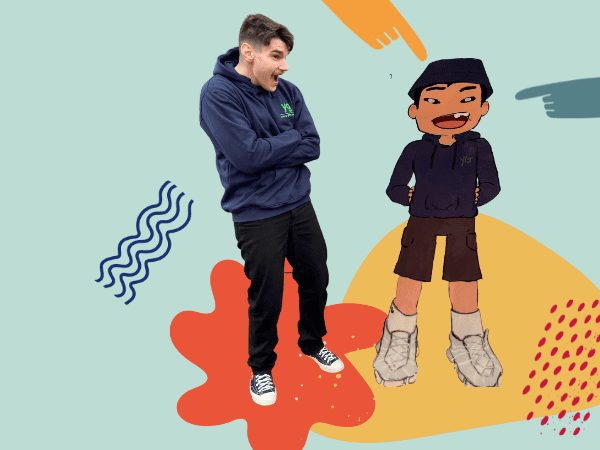
Community Youth Worker Chris Lambert talks to us about the unique vacancy he is leaving at Young Gloucestershire.
“As a kid, my school holidays were great. I spent my time playing loads of sport, going to events and spending time with my family. But for some young people this is far from their reality. Many young people live in areas that have little or no activities for them to get involved in. For many they can’t afford to get involved, or perhaps they can’t travel outside of their communities. Unfortunately some young people don’t have supportive families, or perhaps they do but they are struggling with life’s many challenges and don’t feel able to talk to their families.
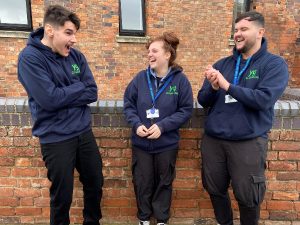
“This is where my job as a Community Youth Worker comes in. I have worked for Young Gloucestershire for over three years as part of their Community Team. Unfortunately the time has come for me to move on, leaving an exciting vacancy here at YG for a Community Youth Worker focusing on Community and HAF (Holiday Activities Fund) Projects. This is a unique role for a unique person so I thought I would give a bit of an insight into the role and the type of person it would suit.
“If any adult thinks back to their youth or teenage years they might have a mixed bag of feelings. We have all felt some kind of struggles in our lives. But for young people today there are some unique challenges that come with living in a modern world. Whomever takes this role, they need to be able to understand those challenges and be able to empathise with young people, listen to them and offer support. Sometimes providing engaging activities and free food through the HAF programme is all that’s needed to really make a difference for young people during their school holidays.
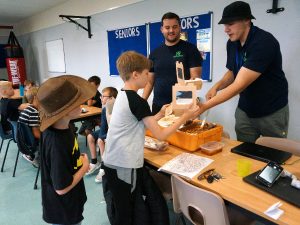
“In this job you need to be able to roll your sleeves up and get involved. Although some of the issues a community youth worker deals with may be serious, that doesn’t mean all our work has to be. You need to be able to have fun and relive some of your best childhood memories as you try and nutmeg as many young people as possible with a football or run away from them in a game of chaos tag. You need to be willing to immerse yourself in activities inspired by young people. Sometimes you have to pull on your shorts and messy trainers and just get involved.
“For some it might seem like an easy (if tiring) job of running around, but at its heart it’s all about building trusted relationships with young people. You need to be relatable, build a rapport and become a positive role model for young people. It’s a different kind of relationship than a teacher or a parent. It is one with mutual respect, non-judgmental and all about empowering young people. To enable yourself to do all that – sometimes you have to kick a ball about together first.
“There is also a basic need to provide positive activities for young people. A safe space for them to spend time with their friends and be comfortable. It is easy to take some of these things for granted if you are lucky enough to have them in your life already. But that is why the other part of this role is about working with stakeholders and community partners to advocate for young people and support stakeholders to understand the work we are doing. Helping them to better understand young people, to see them in a positive light and show them how they can play their part in improving the community for future generations. Many communities have suffered particularly over the last few years and this role is about bringing people together again, reinvigorating communities and bringing the needs of young people to the attention of other providers and larger stake holders
“The legacy I leave behind will be one of year round shorts and a bucket hat but I also hope it is that I have shown young people that there are people in their community that want to help. But who will come after me? You will need to be approachable, be willing to put yourself in the shoes of young people, be willing to relive your youth and help young people explore theirs. Be sensitive to the needs of young people in the modern world and be open-minded. If you can do all that, I think you are going to love this job. There
is nothing better than knowing you have helped make a positive difference in this world and had some fun along the way.”
Sound like a bit of you?
If you are interested in finding out more about this role and others visit our jobs page.
Volunteer goes to Extraordinary Lengths to Raise Money for YG.
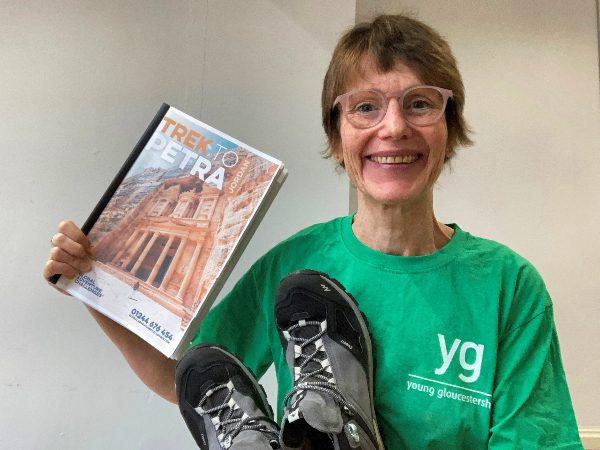
Belinda Wilson, director of www.GlosJobs.co.uk and www.glos.info set about fundraising for Young Gloucestershire after meeting with Tracy Clark our CEO, and feeling so impressed with what the charity does with young people and our strapline “Inspiring Young People.”
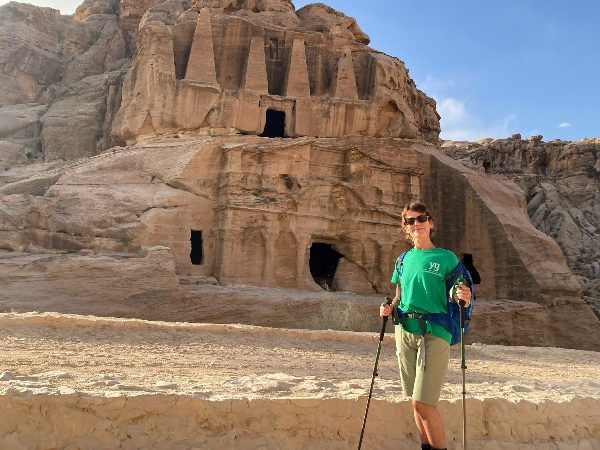
Belinda decided to set her own inspirational challenge, swimming the distance of Cheltenham to Heathrow followed by a trek across the desert to Petra, Jordan. Belinda named her challenge the Bizarre Biathlon.
It took Belinda nearly four months to swim the 155km distance, equivalent to 6,200 lengths of the pool at Cheltenham Ladies’ College. Not an easy feat by any means, especially as Belinda was struck down with Covid during this time. Undeterred Belinda said she loved swimming and this part of the challenge only helped prepare her fitness ready for Petra.
“It was an utterly amazing! The hardest thing I have ever done but also one of the best. I kept thinking about “Inspiring Young People” which I had on the back of my T-shirt. The main problem was that I had injured my calf muscle before going, so I walked the whole way with it strapped and on painkillers.
“The most amazing day was when we walked 38,000+ paces up the edge of a ridge, with a total elevation of 115 storeys. It was all in the 28-30 degree heat and we were carrying at least 4 litres of water with us. At the top, Zuzu the donkey came into her own as she had been carrying the kettle on the whole trek. The guide would light a fire and make us dark, sweet tea. Just what we needed to keep us going the rest of the way. Each night we camped in a different location along the way.
“The day we walked into Petra was fabulous. It is one of the seven wonders of the world and it is easy to understand how it got that title. I am so pleased to have raised over £2,500 (including GiftAid) for Young Gloucestershire and I hope to have inspired a few people along the way. Thank you to everyone who has donated, some of whom are anonymous, so I haven’t been able to say thank you in person.”
YG are incredibly grateful to Belinda for dedicating this impressive feat to the young people of Gloucestershire and for the money that she raised to help inspiring young people. If you would like to donate to Belinda’s JustGiving page click below.
Take on Your Own Challenge
If Belinda’s story has inspired you then why not join us on one of our upcoming challenge events where you can run, walk or trek as we take on feats like the Welsh Three Peaks or may be you could be tempted by a once in a life time challenge like Belinda. Click below to find out more